

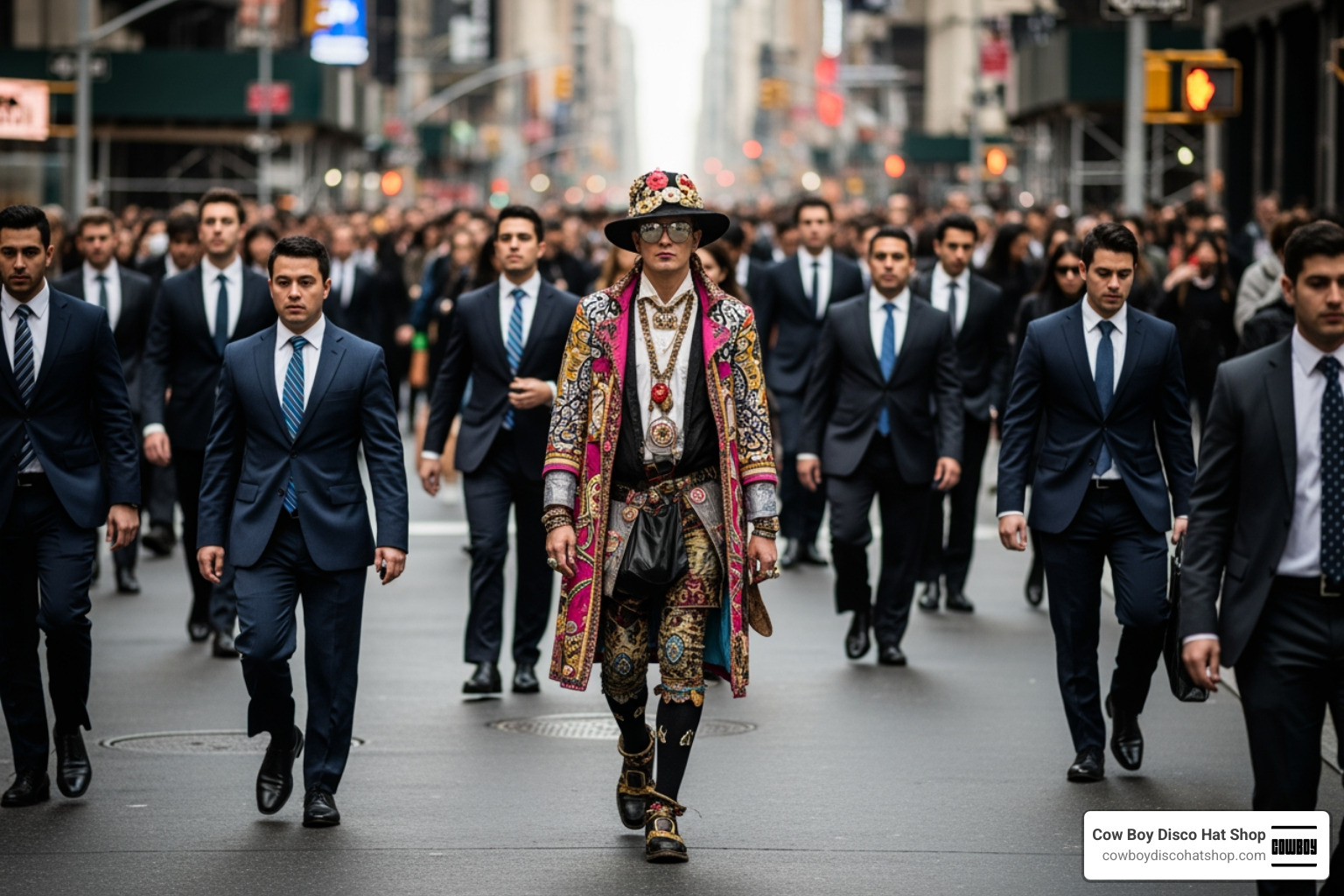
Why The Style Paradox Matters in Today’s Fashion World
The Style Paradox: Looking Unique in a Mass-Produced World is the tension between wanting to express who you are through clothing and living in a system that mass-produces the very looks you think are “yours.”
Here’s the short version:
- What it is: The contradiction of trying to be unique using clothes made for millions of people
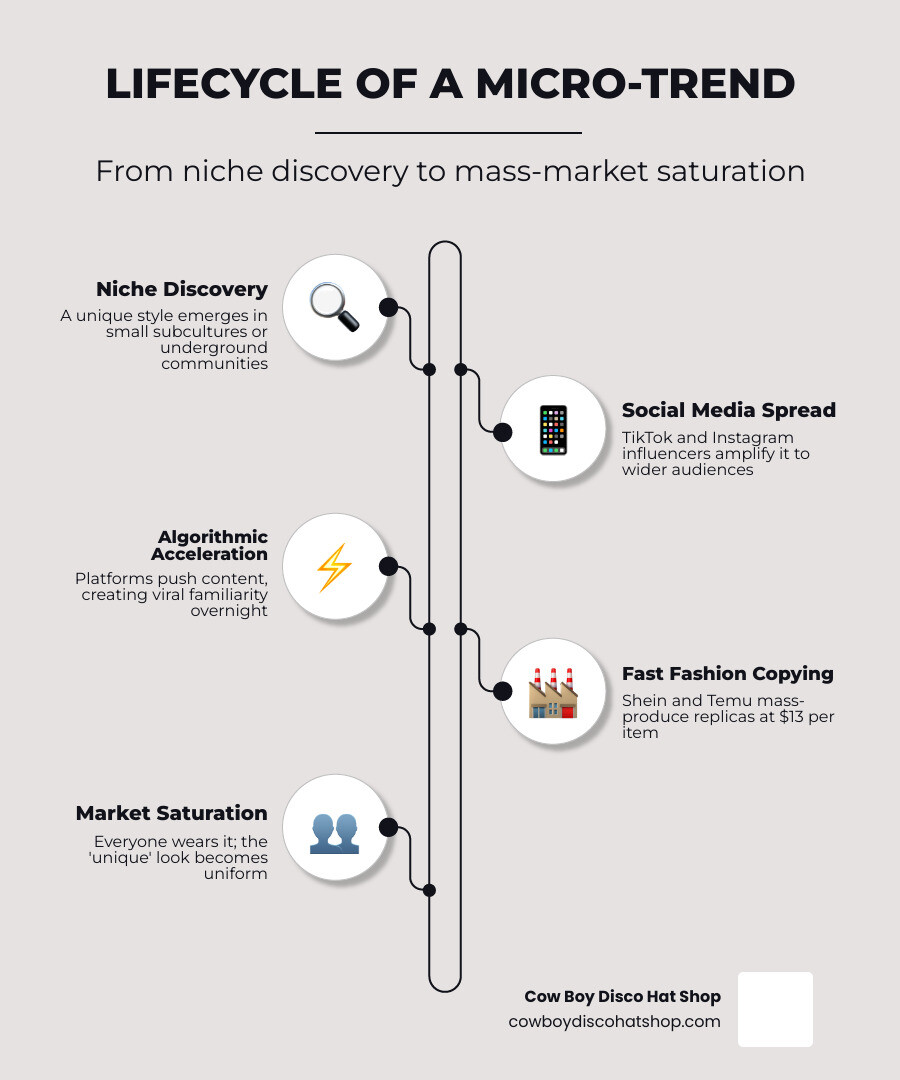
- Why it happens: Algorithms, fast fashion, and social media turn niche styles into mainstream trends almost overnight
- Who it affects: Everyone — from festival-goers to everyday shoppers trying to stand out in a crowd
- What drives it: A mix of psychology, consumerism, and the speed of modern trend cycles
- What you can do: Build style from the inside out — through thrifting, upcycling, and trusting your own taste over trending feeds
Have you ever curated the perfect outfit from Pinterest, stepped outside, and spotted three other people wearing almost the exact same thing? That moment of deflation is the Style Paradox in action. What felt personal turned out to be a product — discovered, amplified, and sold to thousands before you even got dressed.
The average Australian now buys around 56 items of clothing per year at an average cost of just $13 each. Platforms like Shein and Temu generated roughly $3 billion AUD in sales in 2024 alone. The machinery turning “unique” into “uniform” has never moved faster.
Understanding the forces behind The Style Paradox: Looking Unique in a Mass-Produced World involves exploring the intersection of consumer culture and personal identity. The sections ahead go deep into how this system works and how to dress outside of it, offering practical and actionable takeaways.
Understanding The Style Paradox: Looking Unique in a Mass-Produced World
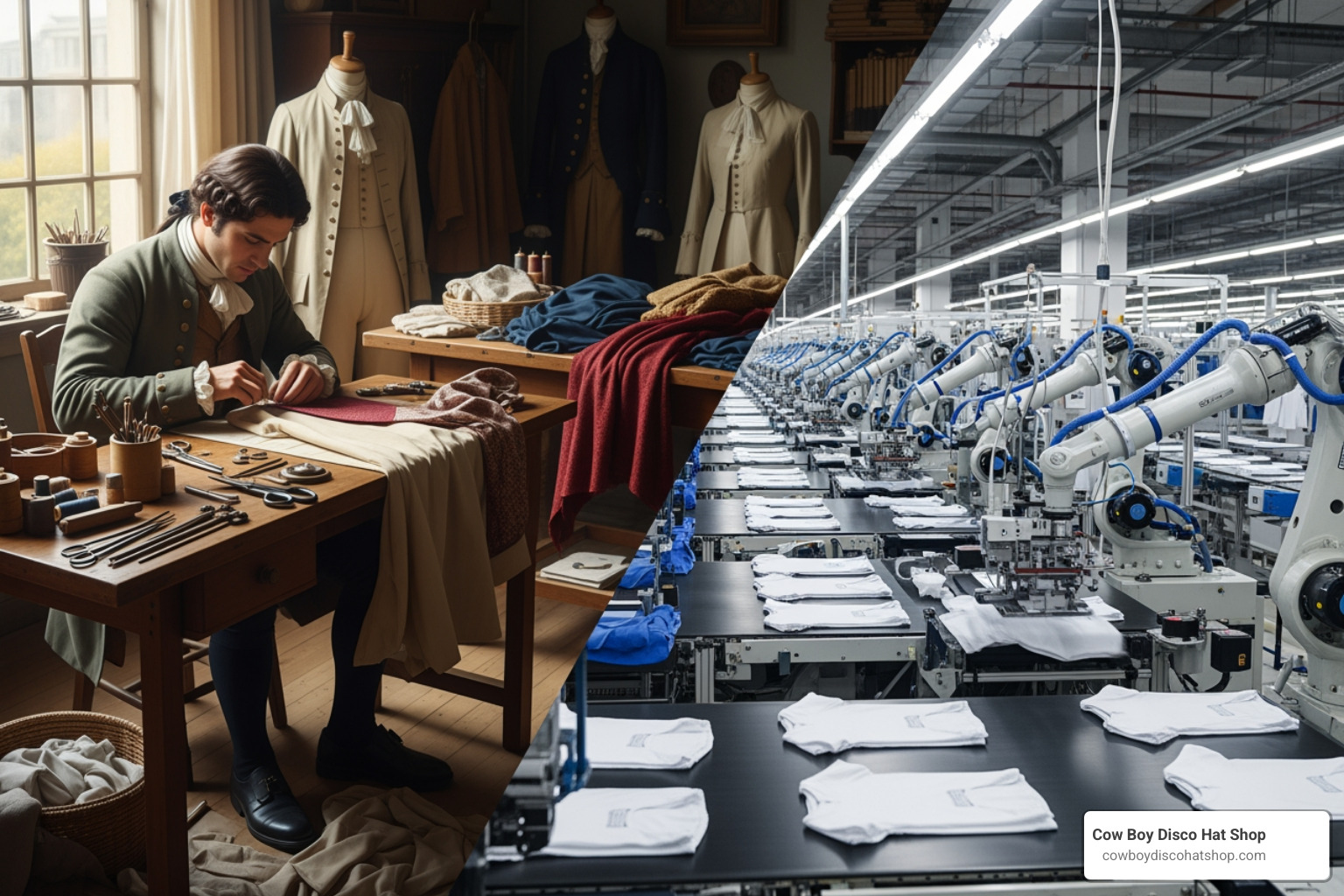
To understand why we feel so “same-y” in 2026, we have to look back at how we got here. Historically, clothing was a matter of craftsmanship. In the 1700s, mass production began replacing the human element of tailoring with factory manufacturing. Fast forward to today, and we aren’t just mass-producing products; we are mass-producing the very idea of an “individual” look.
As explored in The Paradox of Mass-Produced Individuality, individuality is now manufactured like a commodity. Brands “discover” a niche aesthetic—perhaps a small subculture in a specific city—and amplify it through global marketing. Suddenly, what was a personal rebellion becomes a performative uniform. This creates an illusion of choice: you can choose to be “Cottagecore,” “Cyberpunk,” or “Dark Academia,” but all the pieces are coming from the same three factories.
This cycle is a cornerstone of modern consumerism. By selling us the dream of standing out, brands actually pull us into a system of conformity. To stay updated on how these cycles shift, check out our guide on Fashion News And Trends 101.
The Psychology of the Style Paradox
Why do we keep falling for it? It comes down to “Optimal Distinctiveness.” Humans have a deep-seated need to belong (assimilation) while simultaneously wanting to feel special (differentiation). We want to be part of the “cool crowd,” but we want to be the coolest person in that crowd.
Psychologically, this is a balancing act. When we see The Strange Appeal of “Ugly” Fashion, we are seeing people push the boundaries to satisfy their ego. Wearing something “off-putting” signals that you are a trendsetter, not a follower. However, our brains also crave “limbic stability.” Under high cognitive load—like the stress of modern life—we often default to familiar trends because they feel safe and provide tribal signaling. Philosophers like Kierkegaard and Freud noted that mass appeal often serves as an escape from the difficult work of actual self-reflection.
How Algorithms and Social Media Compress Global Trends
In the May 2026 landscape, the “Style Paradox” is accelerated by the digital world. Social media platforms don’t just show us what’s popular; they use algorithms to feed us repetitive versions of “good” outfits until our personal taste is homogenized.
As discussed in The Conformity Paradox: Kierkegaard and Freud on Individuality, Fashion and Consumerism, the speed of trend awareness means that as soon as a style is pinned on Instagram, it’s already in a Zara trend report. Ultra-fast fashion giants like Shein and Temu have mastered this, generating $3 billion in sales by turning viral TikTok aesthetics into physical products in a matter of days. This “visual familiarity” spends the novelty dopamine of a look before it even arrives at your door.
The Conformity of Counterculture and “Alternative” Aesthetics
One of the most ironic parts of The Style Paradox: Looking Unique in a Mass-Produced World is that even those trying to rebel end up looking alike. Take “Dark Academia”—what started as a niche appreciation for intellectualism and classic literature quickly turned into a rigid uniform of brown blazers and turtlenecks.

This is known as the “hipster effect.” Research by Dr. Touboul shows that nonconformists often synchronize with group norms because of delays in registering what others are doing. By the time you’ve adopted an “alternative” look to stand out, thousands of others have done the same. True originality often emerges from shared influences—like the Renaissance or Romanticism—rather than trying to exist in a vacuum. You can see more about how these subcultures evolve in our category/fashion/ section.
Why Modern Style Paradoxically Feels Boring
If we have more clothes than ever, Why Style Feels Boring? The answer lies in “fashion compression.” Trends now happen simultaneously across the globe, leaving no room for regional distinction.
Many of us have fallen into the trap of the “beige personality.” We follow influencer-curated capsule wardrobe guides that promise a “perfect” look but end up killing our creativity. As one writer shared in How I Lost My Personal Style (And Found It Again), following the rules of minimalism can lead to a wardrobe that is “perfect on paper but dead behind the eyes.” We buy resonant items but never wear them because they don’t fit the “formula,” leading to massive wardrobe underutilization.
The Style Paradox: Looking Unique in a Mass-Produced World and the “Ugly” Fashion Movement
To break the boredom, some turn to “aesthetic friction.” Brands like Balenciaga have capitalized on this by releasing “ugly” items—like Croc heels or garbage bag purses. This is the “Mere Exposure Effect” at work: something that looks hideous at first becomes appealing once we see it enough times on “cool” people.
Following advice from How to Make Your Style More Interesting suggests that interesting style comes from living an authentic life, not from buying the “right” items. It’s about the risk-reward of wearing something that might get a “social correction” from peers but feels right to you.
Breaking the Cycle: Strategies for Authentic Individuality
So, how do we actually look unique in 2026? The answer isn’t in buying more; it’s in buying better and getting creative.
Upcycling has become a massive movement, with #Upcycling amassing over 6.9 million views on Instagram. Gen Z is leading the charge here; according to an RMIT survey, they are more likely to buy second-hand or repair clothes than any other generation. This is a vital shift, considering Australia’s massive consumption rates.
| Feature | Fast Fashion Consumption | Sustainable Personal Style |
|---|---|---|
| Source of Inspiration | Algorithmic feeds / Micro-trends | Internal identity / History |
| Cost Per Item | Low ($13 average) | Varies (often higher or thrifted) |
| Uniqueness | Low (mass-produced) | High (one-of-a-kind) |
| Environmental Impact | High (pollution/waste) | Low (circular/repaired) |
| Identity Factor | Performative / Fleeting | Authentic / Lasting |
We can take cues from designers like Dries Van Noten, who has long been a master of eclectic, personal style. For a deeper look at his approach, see Ahead Of Venice Opening Dries Van Noten Secrets Exposed.
The Role of Sustainable and Artisanal Fashion
True individuality often requires rejecting the “global menu” of fashion. Globalization has led to a “Cultural Homogenization Paradox,” where we have more choices but everything tastes (and looks) the same. Supporting local artisans and traditional crafts is a powerful way to decolonize your wardrobe.
France has already taken a stand by introducing the world’s first “fast fashion tax,” adding about $16 to ultra-fast fashion items. While we wait for similar legislation elsewhere, we can make personal choices. Whether it’s looking at Cannes Film Festival 2026 Red Carpet All The Celebrity Looks for artistic inspiration or choosing slow-fashion brands, intentional buying is the antidote to the paradox.
Frequently Asked Questions about the Style Paradox
Can true individuality exist in a world of mass production?
Yes, but it requires shifting from external cues (what’s trending) to internal ones (what you actually like). Authentic expression comes from self-knowledge and the creative mixing of items you already own. It’s about developing a personal visual language that isn’t dictated by a seasonal checklist.
Why do nonconformists often end up looking the same?
This is the “hipster effect.” Because of trend propagation delays, groups trying to be different often synchronize their looks. It’s a form of tribal signaling—even when we think we are rebelling, we are often just looking for a different tribe to belong to.
How has AI changed the definition of luxury and uniqueness?
AI has created an “abundance-exclusivity paradox.” As machine-generated designs become easy to produce, the new luxury is becoming anything “human-made.” However, AI can also be a tool for uniqueness; some use it to remix their existing wardrobes and find novel combinations they never would have thought of.
Conclusion
At the end of the day, The Style Paradox: Looking Unique in a Mass-Produced World is only a trap if you let the system define you. True style isn’t about the absence of trends; it’s about the presence of you within them.
At Cowboy Disco Hat Shop, we believe in pieces that stand out because they are built for real-world experiences. Our Disco Cowgirl Hat Styles That Are Taking Over Nashville are event-tested for visibility and comfort. They aren’t just accessories; they are tools for self-expression under the neon lights of a festival or a night out. When you wear something that reflects your energy, you aren’t just following a trend—you’re setting the vibe.
Explore more unique fashion insights and start building a wardrobe that actually feels like home.