
Breaking Down the Price: How Much Does a Quality Cowboy Belt Cost?
How much does a quality cowboy belt cost? It depends on the materials, craftsmanship, and brand — but here’s a fast breakdown to get you oriented:
| Belt Tier | Price Range | Typical Materials |
|---|---|---|
| Budget / Entry-Level | $50 – $95 | Full-grain or top-grain leather, machine stitching |
| Mid-Range | $100 – $250 | American bison, harness leather, hand-stitching |
| Premium / Exotic | $250 – $500+ | Alligator, caiman, Nile crocodile, custom tooling |
So whether you’re looking to spend $90 or $500, there’s a genuine leather cowboy belt at that price point — and real differences in quality to match.
The western belt market runs wide. Basic leather options start around $52.95, while genuine alligator belts from established brands can reach $499.95. That’s a big gap. And knowing what drives those prices helps you spend smarter.
I’m qamar-un-nisa, a content writer specializing in western fashion and accessories, and I’ve researched cowboy belt pricing extensively to help readers like you understand how much a quality cowboy belt costs across every budget. Let’s walk through exactly what you get at each price point.
How Much Does a Quality Cowboy Belt Cost? terms you need:
- Best Cowboy Belts to Buy Online in 2026
- Premium Handmade Cowboy Belts Worth the Investment
- Where to Buy Authentic Cowboy Belts Online
When we ask, “How Much Does a Quality Cowboy Belt Cost?”, we aren’t just looking at a strip of leather to keep our pants up. In the western world, a belt is a piece of equipment, a fashion statement, and often a family heirloom. As of May 2026, the market has stabilized into three distinct tiers based on the “Three Ms”: Materials, Maker, and Method.
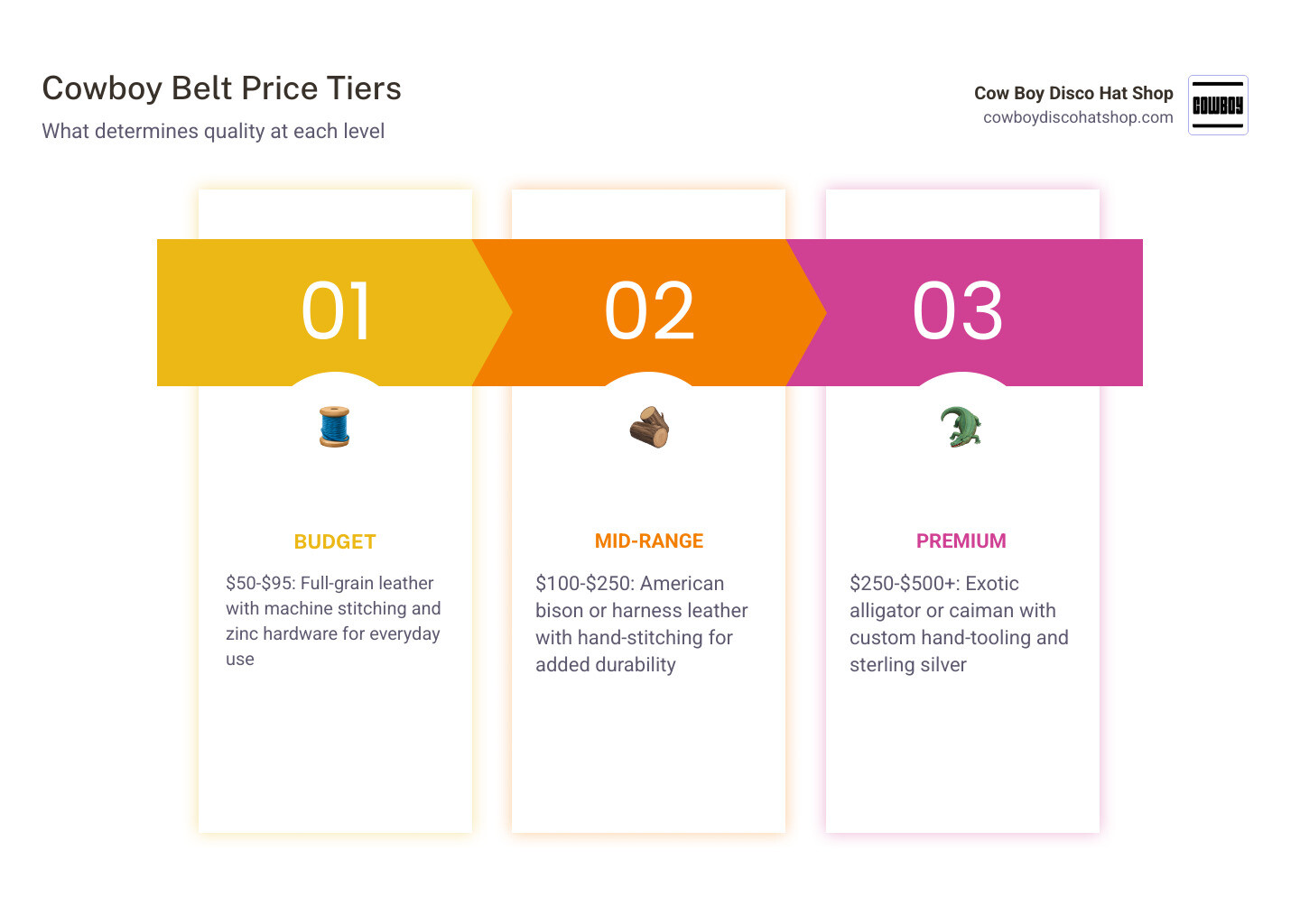
The following table breaks down what you can expect to pay for different grades of cowboy belts:
| Tier | Price Range | Key Features |
|---|---|---|
| Entry-Level | $50 – $95 | Full-grain cowhide, machine-stitched, zinc/alloy buckles |
| Mid-Range | $100 – $250 | Bison, harness leather, hand-finished edges, brass hardware |
| Premium/Exotic | $250 – $500+ | Caiman, Ostrich, Alligator, hand-tooling, sterling silver |
Brand reputation plays a massive role here. A belt from a legacy brand like Tony Lama or Stetson carries a price premium because of their quality control and material sourcing. However, you can often find Affordable Cowboy Belts Under $50 if you are willing to stick to basic, unadorned cow leather.
Entry-Level and Budget-Friendly Options
In the $50 to $95 range, you are looking at solid, dependable work belts. These are typically made from full-grain leather—which is the highest quality part of the hide—but they lack the intricate hand-detailing found in more expensive pieces.
A prime example is The Crazy Horse: Men’s Oil Tanned Stitched Western Leather Belt 1.50″. Priced around $89.99, it uses oil-tanned leather that develops a beautiful patina over time. At this price point, you’ll usually see:
- Machine stitching: Clean and durable, but lacks the “character” of hand-stitching.
- Standard hardware: Often zinc-plated or stainless steel, which is functional but lacks the weight of solid brass.
- Simple designs: Think scalloped ends or basic floral embossing rather than deep, hand-carved tooling.
These belts are perfect for daily ranch work or casual wear where you want the western aesthetic without the “display case” price tag.
Mid-Range Craftsmanship and Exotic Leathers
Once you cross the $100 threshold, the materials become significantly more interesting. This is where we see the introduction of American Bison and high-end harness leathers.
The Ranger Bison Belt – Vintage Bison USA, priced at approximately $108.00, offers a unique pebble grain texture that is naturally tougher than standard cowhide. If you are looking for something even more rugged, the Cowboy Stitch Rugged Belt (tan stitch) sits at the higher end of the mid-range (around $229.00). It utilizes Wickett & Craig harness leather—a vegetable-tanned leather known for its incredible durability and ability to age gracefully.
In this $100 to $250 bracket, you are paying for:
- Superior Leathers: Bison, Ostrich (entry-level), and heavy-duty harness leathers.
- Better Hardware: Solid antique brass or stainless steel snaps.
- Attention to Detail: Burnished edges and dual-stitched keepers.
For more information on the brands dominating this space, check out our guide on Top Western Belt Brands for Men and Women.
Premium and Custom Cowboy Belt Costs
This is the “Sky’s the Limit” category. When you move into exotic skins and custom artisan work, the price reflects the rarity of the animal and the hours of labor involved.
Genuine Alligator belts from Tony Lama, for instance, can range from $399.95 to $499.95. Caiman and Nile Crocodile typically sit between $229 and $300. But it isn’t just about the skin; it’s about the art. A Hand-Tooled Leather Belt – Custom Cowboy Shop can range from $80 for a plain version to $385 for a full Sheridan-style floral pattern.
Custom belts are often lined and stitched for extra thickness and longevity. If you want a belt that features your initials, custom brands, or sterling silver buckles, you should expect to start your budget at $300. These are the Premium Handmade Cowboy Belts Worth the Investment because they are designed to last 20 to 30 years with proper care.
Key Factors That Influence How Much Does a Quality Cowboy Belt Cost?

Understanding How Much Does a Quality Cowboy Belt Cost? requires looking at what happens behind the scenes in the workshop. A $40 belt and a $400 belt might look similar from ten feet away, but the differences are found in the “feel” and the “future” of the leather.
Material Quality and Exotic Skins
The type of animal hide used is the single biggest factor in pricing.
- Cowhide: The standard. Durable and affordable.
- Bison: More expensive due to the unique grain and higher strength-to-weight ratio.
- Ostrich: Known for its distinct “quill” bumps; prices usually start around $215.
- Caiman/Alligator: These are the “luxury cars” of the belt world. The tanning process for these skins is much more complex, and the raw materials are strictly regulated, driving prices toward the $500 mark.
The The Forester: Black Stitched Western American Bison Belt – Scalloped Ends 1.50″ is a great example of a high-quality bison belt ($109.99) that offers a premium feel without the “exotic” price jump of a crocodile.
Another factor is the tanning process. Vegetable-tanned leather, which uses natural tannins from tree bark, takes longer to produce than chrome-tanned leather but results in a belt that holds its shape better and develops a richer patina. You can read more about these differences in our article on Designer Cowboy Belts vs Traditional Western Belts.
Craftsmanship and Customization
Labor is the second major cost driver. Machine-embossed “tooling” is cheap because a hydraulic press does the work in seconds. True hand-tooling involves an artisan using a swivel knife and various stamps to carve designs—like the famous Sheridan floral pattern—into the leather. This can take several hours per belt.
Other high-end features include:
- Chicago Screws: These allow you to swap out the buckle easily. Cheaper belts are often stitched shut or use weak snaps.
- Lining: Premium belts are often two layers of leather stitched together. This prevents the belt from stretching out over time.
- Edge Finishing: Cheap belts have raw, fuzzy edges. Quality belts are burnished (rubbed until smooth) and painted.
For businesses or rodeo teams, Custom Leather Cowboy Belts for Businesses and Events are a popular way to get these high-end features with personalized branding.
Construction and Fit: What Your Money Actually Buys

When you invest in a quality belt, you are buying a specific fit and a standard of construction that ensures the belt won’t fail during a ride or a night out.
How a Quality Western Belt Should Fit
A common mistake is buying a belt that is the same size as your pant waist. Because the belt has to go over your jeans, you usually need to order two sizes larger than your pant size. For example, if you wear a 34-inch waist jean, you typically need a 36-inch belt.
A quality belt will have:
- Five-hole standard: The middle hole (the third one) is where the belt should ideally fasten. This gives you room to tighten or loosen it as needed.
- 1.5-inch width: This is the standard width for most western jeans and fits almost all trophy buckles.
- Proportional Buckle: The buckle should sit snugly against the leather and be proportionate to your frame.
If you’re a professional or aspiring rider, check out the Best Rodeo Cowboy Belts for Professional Riders for tips on fitment during high-intensity movement.
Indicators of High-End Construction
If you are shopping in person or looking at high-resolution photos online, keep an eye out for these “tells” of quality:
- Stitching: Look for heavy-duty nylon thread. It should be slightly recessed into the leather so it doesn’t rub off against your belt loops.
- Weight: A quality belt feels substantial. It shouldn’t feel like plastic or thin “bonded” leather (which is just leather scraps glued together).
- Lining: Check if the back of the belt is smooth leather (like Italian calfskin) or just the rough underside of the top layer. Lined belts are much more durable.
Knowing Where to Buy Authentic Cowboy Belts Online is half the battle in ensuring you get these construction features for your money.
Frequently Asked Questions about Cowboy Belt Pricing
Why are exotic leather belts so expensive?
Exotic skins like alligator and caiman are expensive because of strict conservation laws (CITES), the difficulty of farming/sourcing the animals, and the fact that only a small portion of the hide (the belly) is suitable for high-end belts. Additionally, working with these skins requires specialized skills to ensure the scales are aligned and the leather doesn’t crack.
Is a handmade cowboy belt worth the extra cost?
Absolutely. A handmade belt is usually “saddle-stitched” or made with higher-grade materials that a machine simply can’t handle. While a $50 mass-produced belt might last 2-3 years of heavy use, a $200 handcrafted harness leather belt can easily last 15-20 years.
Do men’s and women’s cowboy belts cost the same?
Generally, yes. The price is driven by the material and the labor. While women’s belts are sometimes thinner (1.25 inches vs 1.5 inches), they often feature more intricate beadwork, crystals, or fringe, which can keep the price on par with men’s styles.
Conclusion
So, How Much Does a Quality Cowboy Belt Cost? In 2026, you should expect to spend at least $80 to $120 for a belt that will actually stand the test of time. While you can find cheaper options, they often rely on “genuine leather” (the lowest grade) or synthetic fillers that will crack within months.
Investing in a quality belt is about more than just utility; it’s about heritage. Whether you choose a rugged bison belt for the ranch or a shimmering alligator piece for a gala, your belt tells a story of craftsmanship and tradition.
At Cowboy Disco Hat Shop, we know that the perfect western look isn’t complete without the right accessories. From our event-tested disco cowboy hats to the finest leather belts, we believe in gear that looks as good under the stage lights as it does on the trail.
Ready to upgrade your western wardrobe? Explore the latest Western Fashion trends and find the pieces that define your style.